
Stress & Sleep · Eau Claire, WI
Massage for Stress and Sleep in Eau Claire
The Relaxation Response · 60 or 90 Minutes · Evening Sessions Until 9:30 PM
The relaxation response is the physiological opposite of the stress response: breathing slows, heart rate drops, muscle tension eases. It is a real, measurable state, and a 60 minute or 90 minute massage with a certified therapist is one reliable way to get into it — which is most of why people book when they are wound up or sleeping badly.
What follows is careful about the difference between that and a treatment for anxiety or insomnia. Massage is not one. NCCIH's material on relaxation techniques and on massage therapy is our source for where the evidence is decent and where it thins, and we would rather quote it than oversell an hour on a table.
What You Should Know
Book the Evening Slot
Last session starts at 8:30 PM, every day. Ending a session an hour or two before bed lines the relaxation up with when you actually want it, rather than at 11 AM on a Saturday.
Swedish, Not Deep Tissue
Long, flowing strokes at light to moderate pressure are what produce the settled feeling. Deep tissue is excellent work but it is not relaxing in the same way — book it for knots, not for stress.
Honest About the Evidence
NCCIH finds relaxation techniques useful for stress and, for some people, sleep — with research that is uneven and effects that are modest. That is a real reason to book. It is not a treatment claim.
The Sauna Is the Second Half
Complimentary with every session. 15 to 20 minutes of heat after the table extends the settled feeling and, on a Wisconsin winter evening, is a large part of the appeal.
It Supports Sleep Hygiene, Not Replaces It
Consistent bed and wake times, a dark cool room and 30 to 60 minutes without screens do more for sleep than any massage. Mayo Clinic's list is short and unglamorous. Massage sits alongside it.
Tell Us If Something Is Wrong
Persistent insomnia, panic symptoms, or low mood that will not lift are medical matters. We will happily give you the hour, and we will also say plainly that it is not the treatment you need.
Who This Is For
- Anyone in a stretch where they cannot switch off at the end of the day
- People whose shoulders sit up around their ears by Thursday
- Light sleepers who wake tense rather than rested
- Anyone who wants an hour with no phone, no screen and nothing to decide
- People already working on sleep habits who want something that supports them
- First-time massage clients — Swedish is the easiest place to start
| Detail | What to expect |
|---|---|
| Recommended style | Swedish or relaxation/therapeutic |
| Recommended length | 60 minutes, or 90 to fully unwind |
| Best time to book | Evening, 6:00 PM to 8:30 PM |
| Last session start | 8:30 PM, 7 days a week |
| Cadence people settle into | Every 2 to 4 weeks |
| Sauna time most guests add | 15 to 20 minutes |
| Adults needing 7+ hours sleep | Most, per standard guidance |
| Screens off before bed | 30 to 60 minutes |
| Included at no charge | Hot stone therapy + sauna |
| First visit | $5 off |
| Address | 2151 Eastridge Center Floor 1, #C |
| Phone | 715-256-8288 |
What actually happens when you relax on a table
The relaxation response is well described: slower breathing, lower heart rate, dropping muscle tension, and a shift in attention away from whatever you were chewing on. You can get there through breathing exercises, meditation, a hot bath, or lying still while someone works on your back. Massage is simply one of the more reliable routes because it requires nothing of you.
Some of the effect is the hands-on work and some is the setting — a quiet room, a fixed hour, no phone. Both are real. Neither is a drug, and the distinction matters when someone tries to sell you a session as a treatment for anxiety.
Why Swedish rather than deep tissue
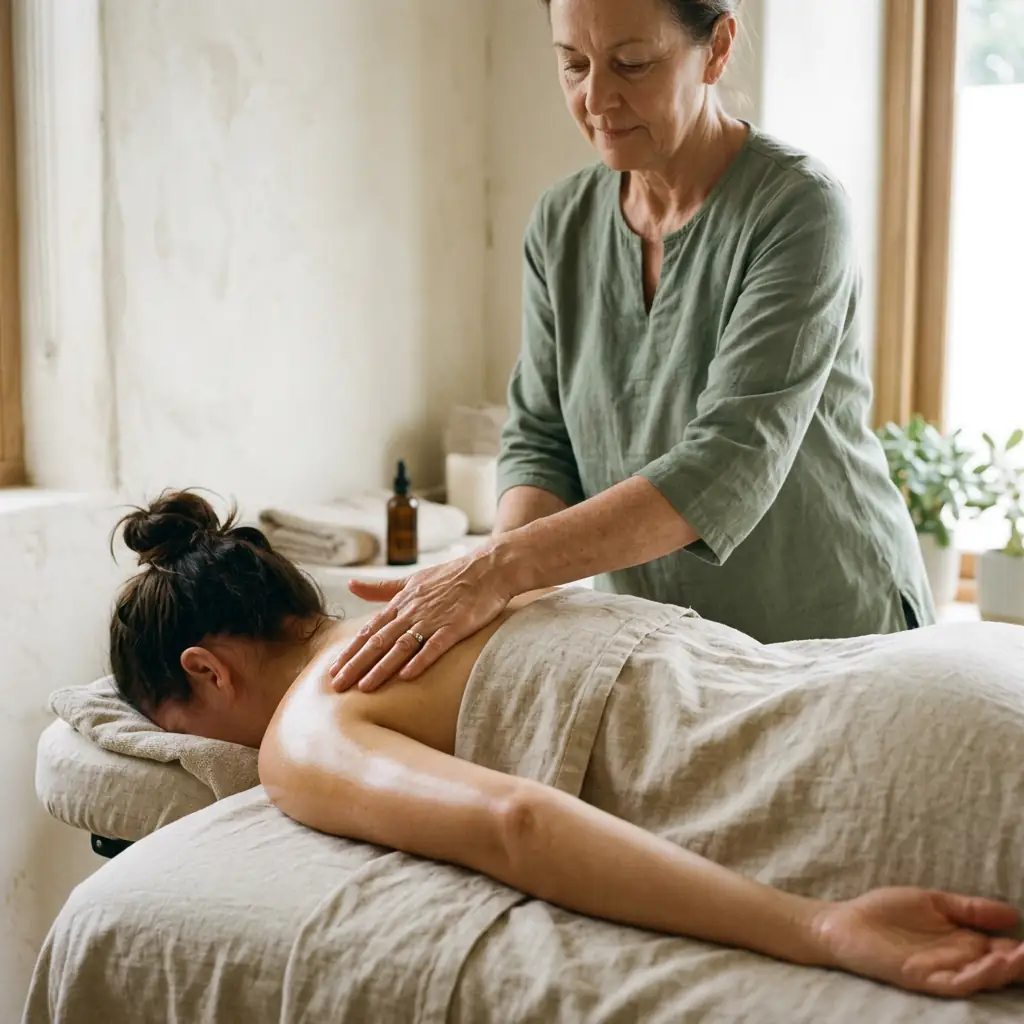
Long, gliding strokes at light to moderate pressure are what most people find settling. Deep tissue is valuable work, but the sensation is engaging rather than sedating — you are paying attention to it, sometimes breathing through it. That is the opposite of what you want if the goal is to switch off.
If you carry real knots as well as stress, the answer is not to pick one. Book 90 minutes, tell your therapist the priority is unwinding, and let them spend 20 minutes on the tight spots and 70 on settling you down.
The hour after matters as much as the hour on the table
Most guests add 15 to 20 minutes in the sauna, which is included. After that, the useful thing is to not immediately undo it — no email in the parking lot, no screen for a while, and if you can, go home rather than back to the office.
This is also why evening bookings work better for this specific goal. A session that ends at 7:30 PM leaves the settled state pointed at bedtime instead of at a workday.
What the research does and does not support
NCCIH's overview of relaxation techniques concludes they can help with stress and may help some people sleep better, while being clear that study quality varies and effects are often modest. Their massage therapy material lands similarly: reasonable support for relaxation and for easing muscle tension, much weaker ground for anything described as treatment.
Mayo Clinic's guidance on relaxation and on sleep points the same way — the fundamentals do the heavy lifting, and pleasant additions like massage support them rather than substitute for them. We think that is a good enough reason to book an hour. We do not think it justifies calling it therapy for insomnia.
| Approach | Evidence | What it is for |
|---|---|---|
| Consistent sleep and wake times | Strong | The foundation |
| Dark, cool, quiet bedroom | Strong | The foundation |
| Regular physical activity | Strong | The foundation |
| 30 to 60 min screen-free before bed | Reasonable | Wind-down |
| Relaxation techniques | Modest, uneven | Wind-down |
| Massage | Modest, short-lived | Wind-down, muscle tension |
| Treatment for diagnosed insomnia | See a clinician | Not massage |
Building it into a month rather than a rescue
One massage during a bad week is a nice hour. What people who use this well actually do is book every 2 to 4 weeks at the same evening slot and treat it as a fixed appointment rather than a reward. The predictability is part of the benefit — there is something on the calendar that is guaranteed to be an hour of nothing.
Pair it with the boring fundamentals. Same bedtime, dark room, and get outside during the day. If your tension is as much physical as mental — a desk job doing the damage — the office worker page covers that side, and chronic pain covers it when the pain has outlasted the stress.
When an hour on a table is not the answer
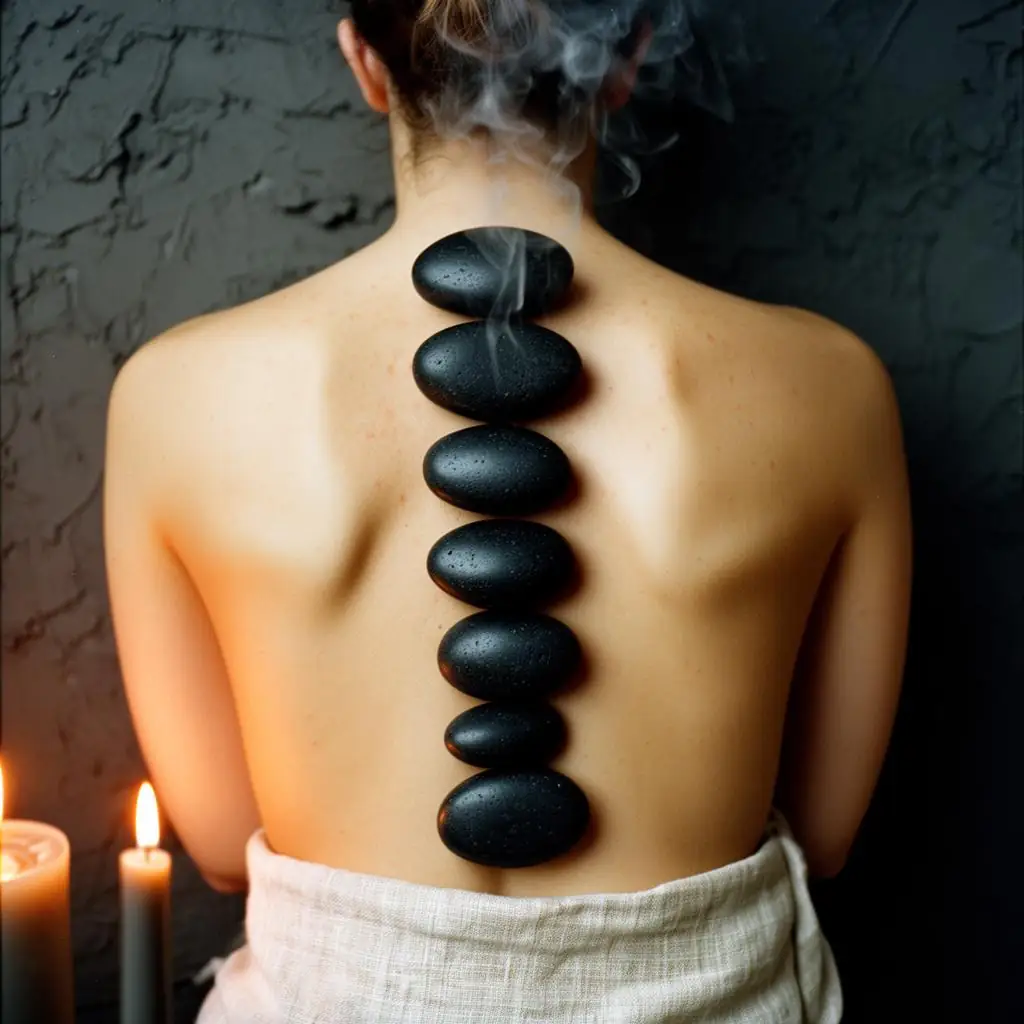
If you have not slept properly in weeks, if anxiety is interfering with work or relationships, if you are having panic symptoms, or if low mood has settled in and will not lift, those are medical matters and there are treatments with far better evidence behind them than massage. Talk to a clinician.
We will still happily give you the hour, and it may well help you feel better for a few days. We just will not pretend that is the same thing as treatment, and we would rather you had both than only us.
How to Book a Massage at Q Healthy Spa
Booking takes about 2 minutes and there is no online form to fill in. Call 715-256-8288 any day between 9:00 AM and 9:30 PM, say which service and length you want, and the session is held under your first name. Walk-ins are taken when a table is free, which on weekday afternoons is most of the time.
- Call 715-256-8288. Someone answers the phone during all 12.5 open hours, 7 days a week — there is no booking app and no deposit.
- Pick a length: 60 minutes for a full body session, 90 minutes for unhurried work on the back and shoulders, or 120 minutes when you want both.
- Pick a pressure: light, medium, or firm. You can change it mid-session at any point, and saying so does not offend anyone.
- Mention add-ons at booking. Cupping and gua sha are added to a 60 or 90 minute session and need a few extra minutes set aside.
- Arrive 5 to 10 minutes early at 2151 Eastridge Center, Floor 1, Suite C. Parking is free and the entrance is on the ground floor.
- Tell the therapist what hurts and what to avoid before the session starts. This 60-second conversation is what makes the other 59 minutes useful.
- Pay by cash or card at the end. First-time visitors get $5 off, and no appointment is needed to claim it.
| Detail | Number | Notes |
|---|---|---|
| Days open per week | 7 | Including most holidays |
| Hours open per day | 12.5 | 9:00 AM to 9:30 PM |
| Last session start | 8:30 PM | For a 60 minute session |
| Session lengths | 60, 90, 120 minutes | Same 4 styles at every length |
| Massage styles | 4 | Futon, Swedish, deep tissue, therapeutic |
| Add-ons available | 2 | Cupping and gua sha, inside a 60 or 90 minute session |
| First-visit discount | $5 | Every new client, no coupon needed |
| Included at no extra charge | 2 | Hot stone therapy and sauna access |
| Google rating | 5.0 stars | 16 reviews |
| Assisted stretches in a futon session | 15 to 25 | Fully clothed, no oil |
| Cupping marks fade in | 3 to 7 days | Dry cupping only, never wet |
| Arrive before your session | 10 minutes | 5 minute intake, 3 to 5 to change |
| Drive from downtown Eau Claire | 7 minutes | 2.5 miles |
| Drive from Chippewa Falls | 15 minutes | 11 miles via Highway 124 |
| Notice for a Saturday booking | 3 to 7 days | Weekday mornings often same day |
Sources
- NCCIH — Relaxation Techniques: What You Need To KnowCovers the relaxation response, sleep and stress, and how the evidence is graded.
- Mayo Clinic — Sleep tips: 6 steps to better sleepThe baseline sleep-hygiene advice massage supports rather than replaces.
- Mayo Clinic — Relaxation techniques: Try these steps to lower stressMayo Clinic's practical guidance on the relaxation response and stress reduction.
Frequently Asked Questions
Does massage help with stress?
It reliably produces the relaxation response — slower breathing, lower heart rate, easing muscle tension — and most guests describe feeling noticeably calmer afterward. NCCIH's material on relaxation techniques supports that use while noting research quality varies and effects are modest. It is a genuine reason to book an hour. It is not a treatment for an anxiety disorder.
Will a massage help me sleep better?
It may, and many guests say it does on the night of a session. The evidence for relaxation approaches helping sleep is real but modest and uneven. What does the heavy lifting is the unglamorous stuff Mayo Clinic lists — consistent bed and wake times, a dark cool room, regular activity, 30 to 60 minutes without screens. Massage supports that; it does not replace it.
Should I book Swedish or deep tissue for stress?
Swedish, or relaxation/therapeutic. Long, gliding strokes at light to moderate pressure are what most people find settling. Deep tissue is engaging rather than sedating — you end up breathing through it, which is the opposite of switching off. If you have real knots too, book 90 minutes and tell your therapist unwinding is the priority.
What time of day should I book?
Evening. Our last session starts at 8:30 PM, 7 days a week, and finishing an hour or two before bed points the settled state at bedtime rather than at a workday. Booking 6:00 PM to 8:30 PM is what most guests using massage for sleep settle into.
How often is worth it?
Every 2 to 4 weeks, at the same evening slot, treated as a fixed appointment rather than a reward for a bad week. The predictability is part of the benefit. A single session during a rough stretch is a pleasant hour but it does not build anything.
Is the sauna included?
Yes, along with hot stone therapy, at no extra charge with every session. Most guests add 15 to 20 minutes in the sauna afterward, which extends the settled feeling — and on a Wisconsin winter evening is a good part of why people book in the first place.
When should I talk to a doctor instead?
If you have not slept properly in weeks, if anxiety is interfering with work or relationships, if you are having panic symptoms, or if low mood has settled in and will not lift. Those have treatments with far better evidence behind them than massage. We will still give you the hour, but we will say plainly that it is not the treatment you need.
What if I do not want to talk during the session?
Say so at intake and your therapist will keep conversation to check-ins about pressure. Plenty of guests book precisely because it is an hour with nothing to respond to. There is no expectation either way.
Book an Evening Session
Last session starts at 8:30 PM, every day. Ask for Swedish, plan 15 to 20 minutes in the sauna afterward, and do not check email in the parking lot. Call 715-256-8288.
Keep Reading
Every page below covers a different angle — technique, pairing, evidence, or the rest of the menu at Q Healthy Spa.